
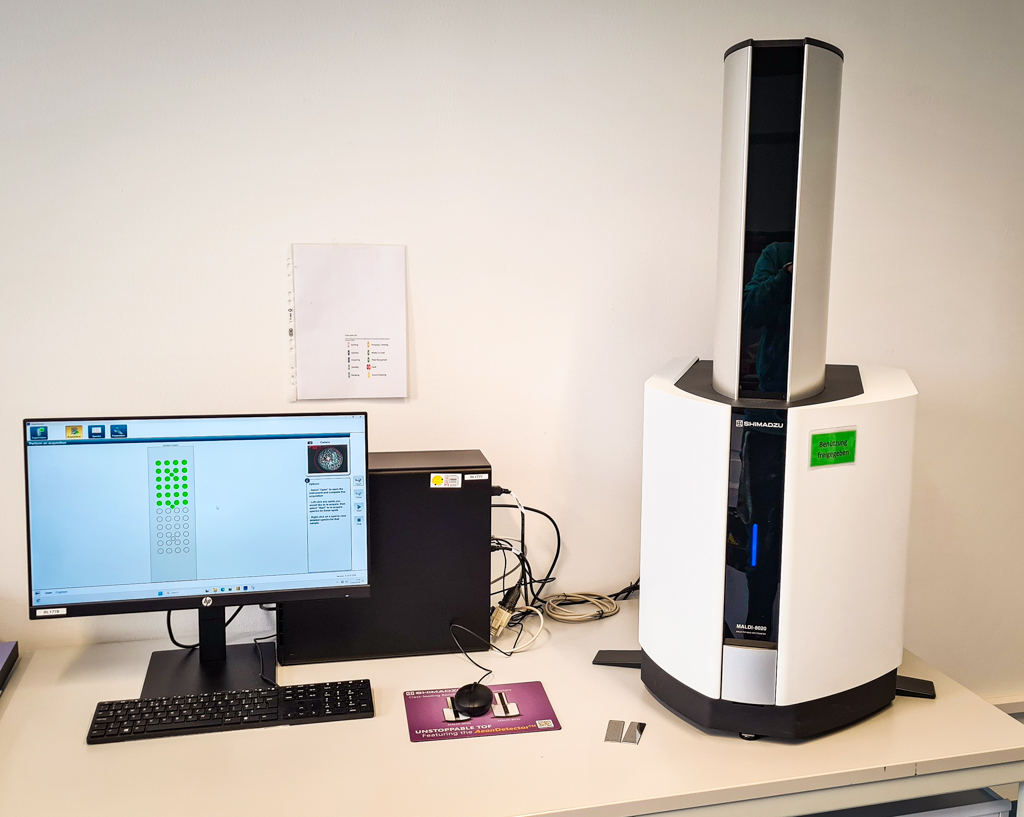
RIPAC‑LABOR has recently implemented a new generation of laboratory technology: the MALDI‑TOF MS 8020 from Shimadzu/Kratos. With this state‑of‑the‑art yet compact system, we take another important step forward in fast and reliable diagnostics within animal health care.
What does this mean in practice?
Thanks to this new instrument, microorganisms such as bacteria, yeasts and fungi can be identified even more quickly and accurately. This is essential for making the right diagnosis and taking timely, well‑informed decisions when dealing with animal diseases.
The new MALDI‑TOF MS system integrates seamlessly into our existing workflow and significantly reduces time to results, directly improving the efficiency of our services.
Broader and deeper insight into pathogens
The technology is particularly strong in identifying:
- common bacteria such as Streptococcus spp.
- more challenging pathogens like Mycoplasma (for example in mastitis) or Avibacterium paragallinarum (Coryza)
- anaerobic bacteria originating from claw lesions and dermatitis digitalis
- less common or unexpected organisms, including pathogens involved in fish diseases (Aeromonas and Flavobacterium species)
This wide coverage ensures that complex and unusual cases can also be analysed reliably.
(text continues under image)
Smart use of reference databases
For microbial identification, RIPAC‑LABOR uses a combination of:
- The SARAMIS reference database, continuously expanded with in‑house data for more than 15 years
- The mabritecCENTRAL database, developed in collaboration with external partners
Together, these databases cover virtually all known bacterial species, including those with published whole genome sequences. This guarantees that our diagnostics remain both robust and future‑proof.
Experience that makes the difference
RIPAC‑LABOR has been using MALDI‑TOF MS technology since 2007 and currently performs more than 70,000 identifications per year. This approach is the cornerstone of our diagnostic services for diseases in livestock animals.
By investing in this new generation of technology, we continue to focus on quality, speed and reliability, strengthening our role as an innovative partner in animal health diagnostics.
